Sometimes, the best journeys start with a feeling. Not an idea. Not a plan. Just a subtle pull, somewhere between restlessness and intuition.
We had 1 day off work with nothing booked, nowhere to be. Just a van, a couple of boards, some supplies, and the undeniable sense that we needed out. Not out in the dramatic escape kind of way—more like a reset. A realignment. Something quieter. We packed light but with purpose: food, water, 4/3 suits, a bed in the back, and Ollie—who always seems to know more than he lets on—threw in two extra boards and a rucksack. No reason. Just a feeling.
We headed north.
Conversation flowed, then faded. The kind of silence that doesn’t feel awkward, just necessary. Ten hours passed like a single exhale. By nightfall, we found ourselves parked just above Loch Lomond, wrapped in stillness. No city noise. No notifications. Just the hum of nature and the slow unfolding of time.
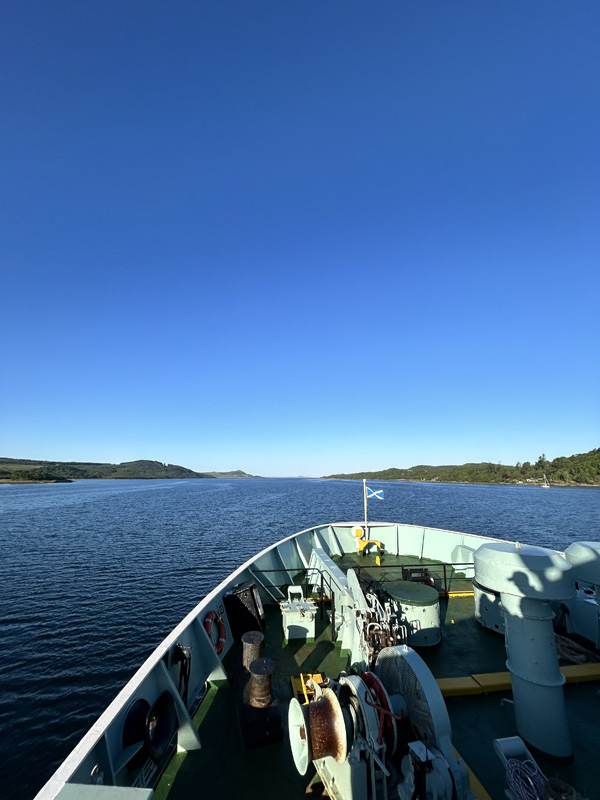
By 4:30 the next morning, we were back on the road, half-asleep, chasing a ferry we hadn’t booked. Destination: Islay (pronounced “eye-la”)—the southernmost of the Inner Hebrides, often called the Queen of the Hebrides. Known for its peaty whiskies, raw coastlines, and quiet sense of knowing.
Somehow, by 7:00 a.m., we were on board. The universe, it seemed, was on our side.
That’s when we met Bill. A wiry, animated American, mid-sixties, on his own sort of pilgrimage—nine whisky distilleries in three days. “Not chasing waves,” he laughed, “chasing firewater.” He had a glint in his eye like he hadn’t slowed down in decades. We liked him immediately.
The ferry docked at Port Askaig, where the air smelled like the earth had been smouldering for centuries. That’s Islay—where peat smoke curls through the ground, the buildings, even your clothes if you stay long enough. We didn’t linger. The surf was calling.
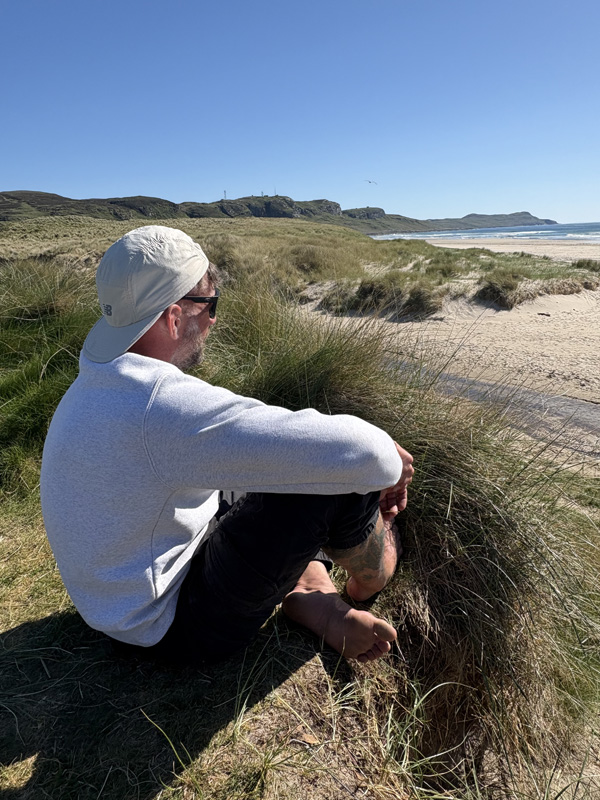
By late morning, we stood on Machir Bay. A wild, west-facing stretch of beach framed by dunes and ancient stone. Offshore winds. Waist-high sets. Not a soul in sight. It felt like being given a gift. No crowds. No noise. Just pure water, clean lines, and the kind of surf that doesn’t care who you are or where you’ve come from. Just show up and ride.
We surfed until our fingers went numb and our hearts were full.
Lunch was cooked on a small camp stove outside the van. Dinner? Found somewhere between the road and the rhythm. Everything just worked. No bookings, no stress. The less we tried, the better it got.
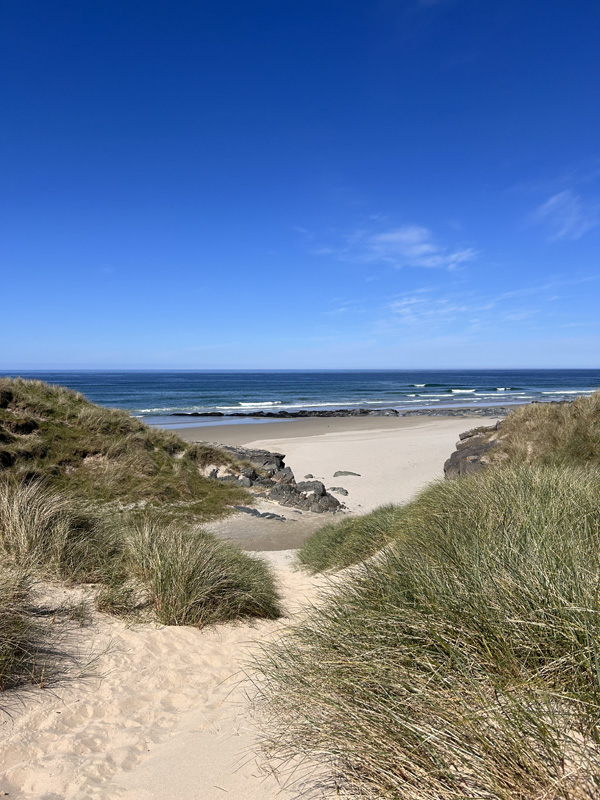
Day two brought more of the same, but better. We paddled out early and explored later. That’s when we found Saligo Bay, hidden behind farmland and dunes. It was like a secret waiting to be kept. A crescent of sand tucked so perfectly into the wild coast it felt like we’d stepped out of time.
We stayed until the sun dipped, then decided to trade the van for something softer—a hotel room, a sauna, a cold plunge that slapped us awake, then the deep relief of a real bed. And, as if summoned by some shared wavelength, Bill turned up again—half-lost, half-lit, still buzzing from distillery number six.
We said cheers, swapped stories, and just like that, the trip turned mythical.
By Sunday evening, we were back in London. Tired. Grateful. Changed.
What started as an escape became something closer to arrival. No plan. No path. Just trust. And time. And tide.
That’s the thing about places like Islay—there’s something ancient in the rocks, something holy in the wind. You can feel it in the way people speak, slow and sure, like nothing needs rushing. You can taste it in the whisky—Laphroaig, Lagavulin, Ardbeg—all peat, smoke, sea, and time. You can hear it in the gulls and the waves and the long quiet between.
And you remember—this is still the UK. But it doesn’t feel like it. It feels like the edge of something older, something wilder, something worth returning to.
That’s the magic.
That’s DRIIFT.